
Ireland
Common Paths for Immigrating to Ireland
Short-stay C visas are available to those who want to stay in the country for fewer than three months. These visas are granted with the understanding that you’ll leave Ireland at the end of your visit, and that you have a friend or relative sponsoring your trip or enough money to support your time in the country.
If you want to stay in Ireland longer or permanently, though, the process is more involved if you are a non-EU citizen.
Every non-resident has a different circumstance that brings them to Ireland. This means the Irish immigration process varies based on your unique situation. Here are some of the common qualifying circumstances that will allow potential emigrants to relocate to Ireland and what that process might be like.
Immigrate as a “Persons of Independent Means”
If you’re self-employed, you can apply for a “persons of independent means” visa. Under this immigration qualification, you’ll apply for a D-Reside visa, which you need to apply for and obtain before entering the country. This allows you to stay in the country on Stamp 0 permission.
According to the visa requirements for a “person of independent means,” you’ll need to have an annual individual income of €50,000 a year. It’s also expected that you’ll have access to a lump sum of money — equal to, as an example, the cost of housing — to cover any major expenses that arise during your time in Ireland.
You’ll need to document and present your finances when applying for this visa, showing how much money you bring in each month and how you spend it. This information must be certified by an Irish accounting firm with expertise in overseas banking and this type of immigration documentation.
Immigrate as an Investor
Investing in Ireland is a path to long-term residency for you and your family. Through the Immigrant Investor Programme (IIP), individuals from outside the European Union can move to the Emerald Isle after making an investment in the Irish economy.
The four available investment tracks are:
Enterprise Investment: You must invest at least €1 million into an existing or new qualifying business for at least three years. Approved Investment Fund: You must invest at least €1 million into a qualifying investment fund for at least three years. Real Estate Investment Trust (REIT): You must invest at least €2 million into at least one qualifying REIT for at least three years. Endowment: You must donate at least €500,000 to a qualifying philanthropic project.
The program’s golden visa is the only avenue to citizenship available, though, and requires that you have a minimum net worth of €2 million.
Immigrate for a Career Opportunity
If you’re from a non-European Union country and find yourself with an amazing career opportunity in Ireland, you must have immigration permission to stay in the country and a work visa.
Only once you have a job offer or employment contract can you apply for immigration permission. It’s important to note that the application needs to be completed before you travel. You’ll only obtain permission if you’re working in a highly-skilled industry or one that’s facing a shortage of Irish workers.
Once you’ve received permission to work in Ireland, you need to apply for a D visa or a long-stay employment visa. This work permit allows you to be employed in the country.
Immigrate After Marriage
As the spouse or civil partner of an Irish national, you can apply for naturalization after three years of marriage or civil partnership and three years of living in Ireland. To apply, fill out Form 8.
Immigrate After Retirement
Similar to immigrating as a self-employed individual, retirees can qualify for residency in Ireland under Stamp 0 requirements. This means to relocate to the country, you’ll need to have an annual income of €50,000 per person as well as access to an additional lump sum.
Immigrate as a Volunteer
If you’re traveling to Ireland to work as a volunteer for a charity or nonprofit on a long-term basis — meaning more than three months — you don’t need a visa. You must apply for and receive pre-clearance from the country, though, before you travel. After entering Ireland, you’ll need to register with the Irish National and Immigration Service — known as INIS — and request permission to stay.
Immigrate as an Asylum Seeker
Those who fear persecution in their own country — based on race, religion, nationality, political opinions, gender or sexual orientation — or those who are unable to live safely in any part of their country can apply for asylum in Ireland at any age. Ireland doesn’t accept asylum applications from those who live in any other European Union member states, though.
Immigrate as a Student
Students from countries outside the European Union are welcome to study in Ireland for the long-term. The conditions under which you can stay in the country will vary based on the topic you’re studying and your degree program.
Make Ireland Your Home With Some Help
If you’re planning to make a move to Ireland, you won’t regret making the Emerald Isle your new home. Find support in your journey through Relocate. Dig-deeper into important topics for immigrating to Ireland, and connect with qualified Advisors who can confidently address your immigration needs.
Get Started. Get Going. Transcend Borders.
Moving to Ireland
There’s a lot to love about Ireland: breathtaking coastlines and gorgeous countryside, arts and culture, friendly and fun-loving people, a rich history, traditional food and drinks, and universal health care. It’s a place like no other, and there are many reasons to fall in love with the Emerald Isle. Sometimes, all it takes is one visit to Ireland or even just reading about this beautiful country or seeing it in a movie to inspire someone to relocate there.
If you’re thinking about moving to Ireland, though, what steps do you need to take? While it isn’t necessarily difficult to move to Ireland as a non-resident, it can still be a lengthy process. We’ll walk you through the common ways non-residents can immigrate to Ireland.
Why You’re Considering Moving to Ireland
There are many reasons someone might want to move to Ireland, ranging from personal and professional to familial connections to the country. Each reason has its own rules, regulations and processes to follow along the way. Here are the key reasons non-residents might decide to call Ireland home.
Your Family Is From Ireland
There are many people around the world with Irish blood who feel the pull of the Emerald Isle because of their ancestors or family members who currently live there. For some people with Irish ancestry, their connection to the country is so strong that they choose to immigrate there to learn more about their heritage and feel closer to their family history.
You’re looking for a Professional Boost
Ireland has the fastest-growing economy in the European Union (EU). This makes it ideal for professionals seeking a change of pace abroad and significant career growth. You’ll just need to obtain an employment permit to explore these exciting opportunities.
Certain industries are growing at a faster pace than others. Hospitality- and service-related jobs dominate the job market in Ireland, but other hot sectors seeing significant growth include technology, engineering and financial services. It’s also home to multinational corporations including Facebook, Google, Apple and Microsoft.
You Married Someone From Ireland
You never know where love might take you, and sometimes the person you fall for doesn’t live in the same country. If you fall in love with an Irish citizen, you could find yourself planning a move to Ireland. So, as you plan your wedding, you’ll also want to be thinking about the Irish naturalization process and the path to Irish citizenship.
You’re Seeking Higher Education
If you’re a student, Ireland continues to enjoy a reputation as one of the most popular study-abroad locations in Europe. The country’s 18 ranked universities, institutes of technology and various other higher education institutions draw thousands of students from across the globe each year.
While many choose short-term programs that are several months long, you might opt to spend your entire university career, rather than just a portion of it, in Ireland. The country even helps recent international graduates find work after earning their degree.
You’re Drawn to the Outdoor Lifestyle
From hiking trails and national parks to water sports like kitesurfing, sailing and cliff diving, the adrenaline junkie will find endless outdoor adventures in Ireland. For those who truly embrace this outdoor lifestyle, they might choose to relocate to Ireland so that they can have these exciting experiences available to them anytime.
You Want to Be Close to Europe
Ireland’s proximity to the United Kingdom and Europe can be a big draw for those who love to travel. The country’s low-cost airline, Ryanair, can transport you to more than 200 destinations in 37 countries within hours. Ireland is a great base for traveling to and exploring the many exciting places and experiences that Europe has to offer.
Living Options in Ireland
Ireland might be a small country — at about 32,000 square miles — but there are numerous cities and regions to consider if you’re relocating to the country. Each area has its own culture, customs and history, and you need to determine which is the best fit for your needs. Here are some major cities and counties in Ireland to consider.
This lively capital city is the largest in Ireland. It has it all — arts and music, foodie offerings, international appeal, universities, a thriving job market and urban living a stone’s throw from gorgeous nature spots. However, it’s also a costly city, ranking as one of the most expensive cities to live in the euro zone. Rents average more than €2,000 a month, and housing might be a little hard to find.

Dublin cobblestoned streets
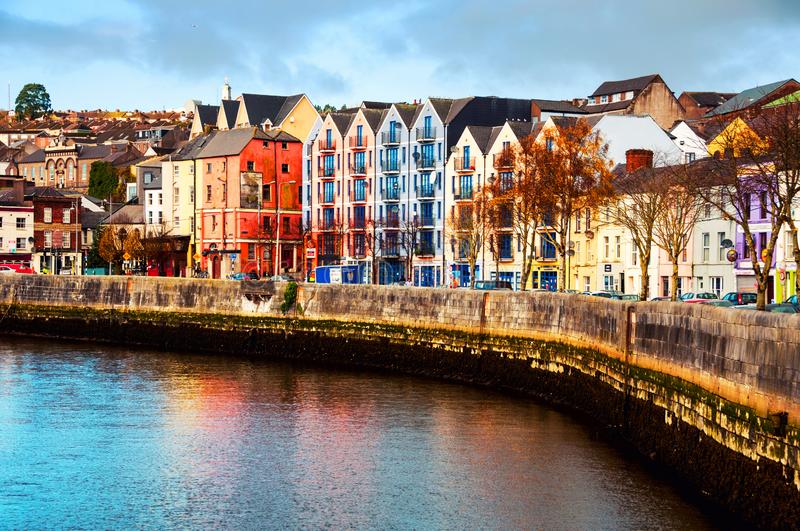
You can feel the history all around you in this quaint, centuries-old seaside city with cobblestone streets. As a fishing community, Cork also has some of the best restaurants — and seafood — in Ireland. Many moving to Ireland will likely be torn between Cork and Dublin. Cork is smaller than Dublin and is not as urban. It has just as much to offer from arts and culture, though, and has a more affordable cost of living.
Located on Ireland’s west coast, Galway is just a quick drive from Dublin. This charming, vibrant city is easily walkable and is filled with indie shops and restaurants. While it’s known for its youthful population and diversity, there’s also a sense of history and tradition in this seaside city.

Cliffs of Moher
As Ireland’s midwest capital and third largest city, Limerick has an international reputation as an engineering and tech city. The city has a youthful vibe, as university students make up a quarter of its population. It’s also an excellent place to find employment opportunities.
This coastal city — Ireland’s oldest — is rich in history, culture, and natural beauty. It’s also incredibly affordable, especially when compared to some of Ireland’s larger cities that have an international draw. It might be a winning option if your budget is smaller.
This region in northwest Ireland is the country’s most northern point. If you’re looking for a slower pace, especially compared to cities like Dublin and Galway, then Donegal is the county for you. You’ll find a rich history, ties to the ancient druids, rugged cliffs, sandy beaches and the largest population of Gaelic speakers in Ireland.
Featured advisors
Connect with leading experts in Ireland
Find the perfect Advisor based on your relocation needs.
relocation topics
Dig-Deeper into the Details
FAQs
Frequently Asked Questions
Here our advisors have answered some commonly asked questions about Ireland immigration matters to further provide you insight.